What If Your Phone Could Protect Your Peace Without You Lifting a Finger?
Imagine this: you're in the middle of a work call when your child starts crying, your lunch order vanishes from the tracker, and your brain feels like it’s about to short-circuit. We’ve all been there—juggling tasks, losing track of deliveries, and sacrificing our calm. But what if the same device that overwhelms you could actually guard your mental space? Order tracking apps, quietly working in the background, might be the unsung heroes of modern sanity. They don’t shout for attention. They don’t demand screen time. Instead, they do something radical: they give you back the one thing no one can afford to lose—peace of mind.
The Breaking Point: When Life Moves Faster Than Your To-Do List
Let’s be honest—some days, just getting through the hours feels like a victory. You’re the planner, the rememberer, the one who makes sure everyone eats, the house stays clean, and the calendar doesn’t explode. And then, out of nowhere, a small thing goes wrong: the birthday gift you ordered weeks ago hasn’t shipped, your prescription is delayed, or the grocery delivery you were counting on disappears somewhere between the warehouse and your doorstep. Suddenly, that tiny gap in information turns into a wave of stress. You start checking your phone every few minutes. Did I miss a notification? Was there an email? Is the courier stuck in traffic? Your focus frays. Your shoulders tighten. That calm you worked so hard to build? Gone.
It’s not just about the package. It’s about what that missing update represents—uncertainty. And when you’re already carrying the weight of family, work, and personal goals, uncertainty feels like sand in the gears. You don’t just lose time; you lose emotional bandwidth. You snap at your partner when they ask a simple question. You forget to respond to a friend’s text. You sit down to eat and realize you’ve barely tasted your food because your mind is three steps ahead, worrying about what’s coming next. The truth is, we weren’t built to hold so many loose ends at once. Our brains crave closure, predictability, and resolution. Without them, even the smallest logistical gap can feel like a crisis.
And here’s the irony: we live in a world where information is supposed to be instant. We have smartphones, smart homes, smart watches—but somehow, we’re still the ones doing all the work. We’re the ones refreshing pages, calling customer service, and playing detective with tracking numbers. The technology was meant to help, but too often, it just adds another task to the list. What if it didn’t have to be that way? What if, instead of asking more from you, your phone could quietly take something off your plate?
Enter the Silent Guardian: How Order Tracking Apps Work Without Being Noticed
Picture this: you order a refill of your child’s allergy medication on a Tuesday evening. You click confirm, close the tab, and go on with your life. No bookmarks. No reminders. No daily check-ins. And then, on Thursday morning, as you’re packing school lunches, a soft chime comes from your phone. Not urgent. Not loud. Just a gentle nudge: ‘Your prescription has been delivered. Left at your front door.’ You glance over. There it is, in the porch cam feed—white bag, pharmacy label, sitting right where it should be. No panic. No wasted time. No missed dose. Just peace.
That’s the magic of a good order tracking app. It’s not flashy. It doesn’t have a million features or a complicated dashboard. It’s not trying to impress you. It’s designed to be invisible—until it matters. These apps connect securely to your shopping accounts, whether it’s Amazon, your pharmacy, or the grocery store you use every week. They automatically sync every order you make and monitor it from warehouse to doorstep. No manual entry. No extra steps. And when something changes—a delay, a reroute, a delivery confirmation—you get a simple, clear alert. Not a barrage. Not a flood. Just the right information, at the right time.
Think of it like a co-pilot for your daily logistics. You’re still in control, but you’re not alone. You don’t have to remember every tracking number. You don’t have to refresh five different websites. The app does that for you, silently, in the background. And because it’s smart, it learns what matters to you. Maybe you want to know the moment your child’s school supplies arrive. Maybe you need a heads-up before an important gift delivery so someone can be home to sign. You set your preferences once, and the app respects them. It doesn’t interrupt your focus. It protects it.
This isn’t about convenience. It’s about relief. It’s about freeing your mind from the constant loop of ‘Did it arrive? Should I check?’ That mental load—the invisible work of managing household logistics—is real. And when you offload even a small part of it, you create space. Space to breathe. Space to be present. Space to remember that you’re not just a scheduler or a problem-solver. You’re a person, too.
Reclaiming Time: The Hidden Gift of Not Having to Check
Let’s talk about time—not the clock kind, but the mental kind. The kind that lets you finish a thought without interruption. The kind that allows you to listen deeply when your daughter tells you about her day. The kind that gives you five quiet minutes to sip your coffee and just *be*. That kind of time is priceless. And yet, so much of it gets stolen by small, repetitive tasks—like checking if a package is on its way.
Imagine two versions of your day. In the first, you’re not using a tracking app. You ordered a new pair of shoes for your son’s school play. The show is Friday. It’s Wednesday afternoon. You haven’t seen a tracking update since Monday. So every time you pick up your phone—between meetings, during lunch, while folding laundry—you open the retailer’s website. Refresh. Refresh again. Still no movement. Your mind starts to race. What if it doesn’t come in time? What if I have to go to the store last minute? You feel a low hum of anxiety, like background noise you can’t turn off.
Now imagine the second version. Same order. Same play. But this time, you’ve enabled automatic tracking. On Tuesday evening, you get a soft notification: ‘Shoes shipped. Expected delivery: Thursday by 8 PM.’ No guesswork. No checking. On Thursday morning, another alert: ‘Out for delivery. Estimated arrival: 5:30–7:30 PM.’ You glance at the time. You’ll be home. You relax. You don’t think about it again—until the final alert arrives: ‘Delivered. Left at front door.’
What changed? The shoes arrived at the same time. But your experience was completely different. In the first version, you spent hours—literally—mentally circling the same worry. In the second, you were free. You focused on your work. You played with your kids. You even started that book you’ve been meaning to read. The real benefit wasn’t knowing where the shoes were. It was not having to wonder.
This is the quiet power of effortless awareness. When you don’t have to chase information, you gain something far more valuable: uninterrupted focus. And that focus lets you show up in your life—really show up. You’re not half-listening because part of your brain is tracking a delivery. You’re not distracted during dinner because you’re worried about a missed package. You’re here. Present. Calm. And that calm isn’t just nice to have—it’s necessary. It’s what lets you respond instead of react. It’s what keeps you from burning out.
Family Rhythm, Personal Calm: Balancing Roles Without Burning Out
Being a mom means wearing a dozen hats—chef, nurse, teacher, scheduler, emotional anchor. And the weight of it all can be exhausting, especially when the little things go wrong. But what if technology could help you stay in rhythm instead of constantly playing catch-up?
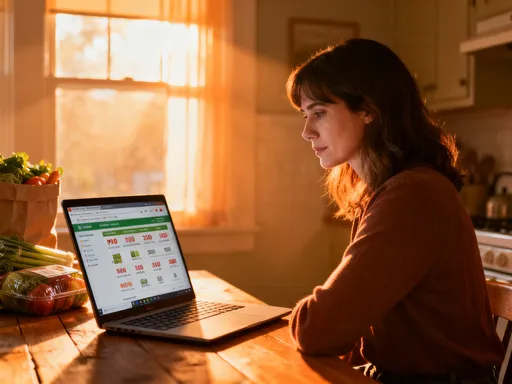
Take meal planning. You’ve got a busy week ahead. No time to grocery shop. So you order online. But without tracking, you’re left wondering: will it come on time? Should I keep backup food ready? What if the delivery misses the window and the milk spoils? That uncertainty creates tension—not just for you, but for everyone in the house. You’re short-tempered. The kids feel it. Your partner walks on eggshells.
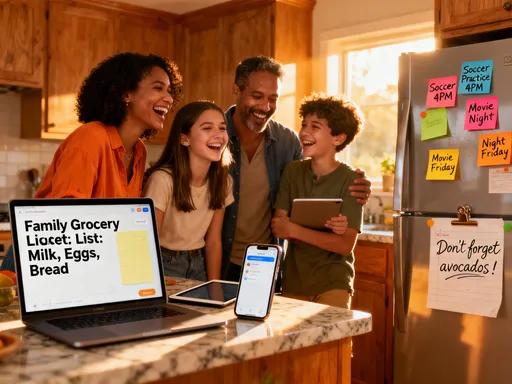
Now, imagine setting up shared delivery alerts with your spouse. You both get a notification when the groceries are out for delivery. One of you adjusts your schedule. No last-minute panic. No cold pizza for dinner. And when the order arrives, you both know—no guessing, no blame. It’s a small thing, but it changes the tone of the whole week. There’s less friction. More teamwork. And more space for the things that matter—like bedtime stories, weekend hikes, or just laughing together over a silly TikTok.
Or think about holidays. You’re juggling gifts for three kids, aging parents, and a handful of teachers. Without tracking, it’s chaos. Did the art supplies for your daughter’s teacher arrive? Did the sweater for your mom make it before her trip? Every unanswered question is a tiny weight on your shoulders. But with automatic tracking, you get peace. You see which gifts have arrived. You know which ones are still in transit. And when one is delayed, you have time to adjust—maybe handwrite a note, maybe pick up a small backup gift. You’re not scrambling. You’re prepared. And that preparation doesn’t just save time—it saves your spirit.
The beauty of these tools is that they don’t replace your care. They protect it. They don’t make you less involved. They make you more present. Because when you’re not stuck in logistics, you have more energy for love. You have more patience for the tough moments. You have more joy for the quiet ones. And isn’t that what we all want—to be fully here, for our families and for ourselves?
Beyond Convenience: How Small Tech Habits Build Emotional Resilience
We don’t often talk about how much emotional energy goes into managing the small stuff. But the truth is, every unanswered question, every last-minute scramble, every moment of uncertainty chips away at our sense of control. Over time, that erosion can make us feel fragile—like we’re one missed delivery away from falling apart.
But what if we could build emotional resilience through small, smart habits? What if reducing micro-stresses could actually make us stronger in the face of bigger challenges?
Here’s how it works: every time you use a tool that removes uncertainty, you’re reinforcing a quiet message to your brain—‘You’re safe. You’re prepared. You’ve got this.’ That sense of predictability isn’t just comforting. It’s empowering. It creates a foundation of calm that lets you handle the bigger storms—job changes, family health issues, personal setbacks—with more grace and confidence.
Think of it like emotional savings. Every time you avoid a panic over a missing package, every time you don’t have to cancel plans because a delivery was late, you’re depositing a little peace into your inner account. And when real challenges come—and they will—you have reserves to draw from. You’re not starting from zero. You’re not already drained. You’re grounded.
One mom I spoke with put it this way: ‘Before I started using automatic tracking, I felt like I was always one step behind. Now, I feel like I’m in the rhythm of my life instead of fighting it. I still have hard days. But I don’t feel as overwhelmed. I feel like I can breathe.’
That’s the deeper gift of these tools. They’re not just about packages. They’re about peace. They’re about proving to yourself, over and over, that you can trust the process—and trust yourself. And that quiet confidence? It spills into everything. You speak up more at work. You set better boundaries. You take care of yourself, not just everyone else.
Making It Work for You: Simple Setup, Real-Life Rules
Now, I know what you might be thinking: ‘This sounds great, but isn’t it complicated? Won’t I get flooded with notifications? What about privacy?’ Let me ease your mind—this isn’t about adding another app to your phone or creating more work. It’s about choosing one tool that works quietly and reliably, then setting it up once so it works for you forever.
Start by picking a well-reviewed, secure tracking app—something that’s been around for a few years and has strong privacy policies. Look for one that connects automatically to the stores you use most, like your pharmacy, grocery chain, or favorite online retailer. The setup usually takes less than five minutes: log in, grant permission, and let it sync your past and future orders. That’s it. No spreadsheets. No manual entry.
Next, customize your alerts. This is key. You don’t want to be pinged every time a warehouse scans your package. You want to know the big moments—shipped, out for delivery, delivered. Most apps let you choose exactly what you want to hear about. Set it once, then forget it.
And yes, privacy matters. Make sure the app uses encryption and doesn’t sell your data. Read the permissions. If something feels off, trust your gut. You’re not just giving access to your orders—you’re giving access to your daily rhythm. It should feel safe, not sketchy.
Finally, set boundaries. Turn off non-essential notifications during focus hours—say, 9 to 11 AM when you’re working, or 6 to 8 PM when you’re with your family. Let the app work in the background, but don’t let it interrupt what matters most. You’re in charge. The technology serves you—not the other way around.
And if you’re sharing with your partner or older kids, make it simple. A shared family account or a group text for major deliveries can keep everyone in the loop without micromanaging. The goal isn’t to track every move. It’s to reduce stress and build trust.
The Quiet Revolution: Technology That Serves Your Life, Not the Other Way Around
We’ve been sold a version of technology that demands our attention—endless pings, addictive feeds, notifications that pull us away from real life. But what if tech could be different? What if it could be quiet, respectful, and kind? What if it could guard your peace instead of stealing it?
That’s the promise of tools like order tracking apps. They don’t need to be loud to be powerful. They don’t need to be flashy to be life-changing. They work in the background, like a good friend who shows up without being asked. They don’t solve every problem—but they take one weight off your shoulders. And in a world that asks so much of women, especially mothers, that small relief can make all the difference.
This isn’t about becoming more efficient. It’s about becoming more human. It’s about reclaiming your time, your focus, and your calm. It’s about showing up for your family—not as a frazzled manager, but as a present, grounded, loving person. And it’s about honoring your own needs, not just everyone else’s.
So here’s my invitation: take a look at the small stresses in your day. Where are you spending mental energy on things a tool could handle? Where could you use a little more predictability, a little more peace? Maybe it’s package tracking. Maybe it’s a smart grocery list. Maybe it’s something else entirely. The point isn’t to do everything with tech. It’s to choose the tools that care about your life as much as you do.
Because you deserve to move through your days with more ease. You deserve to feel in control. And you deserve to protect your peace—one quiet, thoughtful choice at a time.