Tired of feeling overwhelmed while working from home? This app brought me peace
Working from home sounded ideal—no commute, flexible hours, more time with family. But reality hit hard: endless distractions, blurred boundaries, and a constant sense of being 'on.' I felt frazzled, unfocused, and emotionally drained—until I discovered a simple tool that changed everything. It wasn’t another productivity hack. It was a meditation app that quietly guided me back to calm, helping me simplify tasks, stay present, and actually enjoy my workday. What started as a desperate search for better sleep turned into a daily practice that reshaped how I work, think, and connect with the people I love. And the best part? It didn’t require extra time, special skills, or even sitting cross-legged on the floor.
The Hidden Struggle of Working from Home
You didn’t just choose remote work for convenience—you chose it for freedom. The dream was real: no more rushing out the door, no more expensive lunches, no more missing your child’s school play because of a meeting. You imagined sipping tea while answering emails, taking walks during breaks, and ending your day with energy left for your family. But somewhere along the way, that dream got tangled in reality. Your dining table became your desk. Your kitchen counter turned into a filing cabinet. And your brain? It never really clocked out.
Think about it: when was the last time you truly stopped working? Not just closed your laptop, but actually let go of the mental load? The truth is, remote work blurs the lines in ways we didn’t expect. You’re physically at home, but mentally still in back-to-back Zoom calls. You’re chopping vegetables for dinner, but mentally drafting an email. You’re lying in bed, lights off, but wide awake, replaying a conversation from three hours ago. That constant mental hum—like a fridge that never turns off—is exhausting. And it’s not just you. So many of us are living in this state of low-grade overwhelm, mistaking busyness for productivity and exhaustion for dedication.
The emotional toll is real. You start snapping at your kids over spilled milk. You forget to call your mom back—again. You feel guilty for not doing enough at work, and guilty for not being present at home. It’s a cycle that chips away at your confidence and your joy. And the worst part? No one sees it. From the outside, you’re managing. But inside, you’re drowning in invisible tasks, unresolved thoughts, and the quiet fear that you’re failing at both work and life. This isn’t laziness. This is burnout in slow motion. And it’s not something you can power through with another to-do list or a fancy planner. What you need isn’t more time management—it’s mental space.
How Mental Clutter Sabotages Productivity
Here’s something no one tells you: your brain has a limited capacity for attention, and when it’s full, everything slows down. Imagine your mind as a browser with 20 tabs open—some useful, some forgotten, all draining your system. That’s what mental clutter looks like. It’s not just about being busy; it’s about carrying unresolved thoughts, lingering worries, and half-finished decisions in the background of your mind. And while you’re trying to focus on one task, your brain is quietly processing all the rest.
This is why simple things start to feel impossible. You sit down to write a report, but your mind keeps jumping to whether you paid the electric bill. You walk into a room and forget why. You spend 10 minutes staring at your inbox, paralyzed by the number of unread messages. You know what needs to be done, but you can’t seem to start. That’s not a lack of discipline—it’s cognitive overload. Your brain is working so hard just to keep up with the noise that it has no energy left for clear thinking or creative problem-solving.
And it doesn’t stop at work. That same mental fog spills into your home life. You’re physically present, but emotionally distant. You hear your daughter telling you about her day, but you’re already planning dinner in your head. You’re supposed to be relaxing, but your body feels tense, like you’re still waiting for the next notification. Over time, this constant state of low-level stress rewires your nervous system. You become more reactive—quick to frustration, slow to joy. You stop noticing the little things: the way sunlight hits the floor in the afternoon, the sound of your partner laughing, the quiet peace of a moment without demands.
The irony is that we think we need to do more to fix this. We download another app, buy a new planner, promise ourselves we’ll ‘get organized’ tomorrow. But what we really need is the opposite: to do less, to let go, to create space. Because productivity isn’t about how much you can cram into a day. It’s about how clearly you can focus on what matters. And clarity only comes when your mind is quiet enough to hear yourself think.
Discovering the App That Changed My Routine
I didn’t find this app because I was looking for peace. I found it because I couldn’t sleep. One night, after another day of feeling scattered and stressed, I was scrolling through my phone at 2 a.m., desperate for something—anything—that might help me shut my brain off. That’s when I saw an ad for a meditation app with a simple promise: 'Calm your mind in 5 minutes.' I almost laughed. Five minutes? I’d been trying to calm my mind for five years. But something made me download it. Maybe it was exhaustion. Maybe it was hope.
The first time I used it, I felt ridiculous. I sat on the edge of my bed, eyes closed, following a voice telling me to focus on my breath. My back was stiff, my legs felt awkward, and my mind was racing. 'This is not working,' I thought. 'I’m too stressed for this.' But I kept listening. And when the 5-minute session ended, something surprised me: I didn’t feel transformed, but I did feel… lighter. Like a tiny weight had been lifted off my chest. It wasn’t magic. It wasn’t enlightenment. But it was real.
I didn’t become a daily meditator overnight. Some days, I forgot. Some days, I tried and gave up after 30 seconds. But on the days I stuck with it—especially those chaotic mornings when I felt behind before I even started—I noticed a difference. I was less reactive. I made decisions more easily. I didn’t spiral as fast when something went wrong. It wasn’t about clearing my mind completely—that still felt impossible. It was about creating a small pause, a moment of reset, before jumping into the day.
What surprised me most was how natural it started to feel. I wasn’t adding another thing to my schedule; I was replacing the anxious scrolling, the doom-refreshing, the mindless tapping with something that actually helped. And slowly, without even trying, I began to look forward to those few minutes. It became my quiet time, my mental reset, my way of saying, 'I matter too.'
How the App Simplifies Focus, Not Just Relaxation
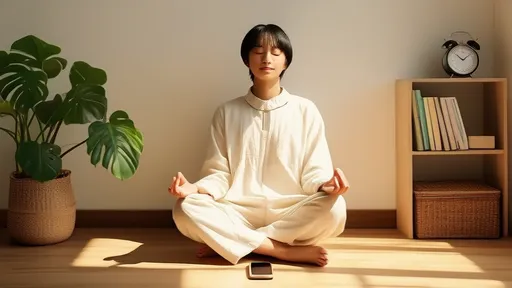
If you’re picturing meditation as hours of silent sitting or chanting in a language you don’t understand, let me set the record straight: this app isn’t about that. It’s not spiritual. It’s not mystical. It’s practical. Think of it as a tool for mental hygiene—like brushing your teeth, but for your brain. Just as brushing prevents cavities, these short sessions help prevent mental clutter from building up.
The app uses science-backed techniques like focused attention, body scans, and mindful breathing—all explained in plain language. No jargon, no pressure. You don’t need to believe in anything. You just need to show up for a few minutes. The sessions are short—3 to 10 minutes—and designed for real life. There’s one for when you wake up and feel overwhelmed. One for when you’re switching between tasks and need to reset. One for when you’re about to start a big project and want to focus. And one for when you’re trying to end your workday but your mind won’t shut off.
What makes it different from other apps is how it meets you where you are. On a good day, you might do a 10-minute session to deepen your focus. On a hard day, you might just do 3 minutes of breathing while sitting at your desk. It doesn’t judge. It doesn’t shame. It just guides. And over time, you start to notice patterns: how your body tenses when you’re stressed, how your breath changes when you’re anxious, how a single moment of awareness can shift your entire mood.
This isn’t about escaping reality. It’s about engaging with it more clearly. When you practice bringing your attention back to your breath—again and again, without judgment—you’re training your brain to do the same during the workday. You catch yourself before sending that reactive email. You pause before snapping at your child. You notice when you’re distracted and gently bring yourself back. That’s the real superpower: not calm, but awareness. And awareness is the first step toward change.
Integrating Mindfulness into Your Workday (Without Extra Time)
One of the biggest myths about mindfulness is that it takes time. I believed that too—until I realized I was already wasting time in ways I didn’t notice. Think about your day: how many minutes do you spend waiting for a meeting to start? How long do you scroll through social media while your computer loads? How much time do you spend staring at a blank screen, avoiding a task? Those moments add up. And instead of filling them with more mental noise, I started using them for micro-moments of mindfulness.
Now, when I’m waiting for a Zoom call to begin, I don’t check my phone. I close my eyes and do a quick 2-minute breathing exercise from the app. Before I reply to a stressful email, I take 60 seconds to ground myself—feeling my feet on the floor, noticing my breath, letting go of tension in my shoulders. After a tough conversation, I don’t jump straight into the next task. I pause, listen to a short guided reset, and clear my mental slate.
These aren’t big changes. They don’t require a meditation cushion or a quiet room. They fit into the cracks of my day—those in-between moments that used to leave me more frazzled. And because they’re so short, they don’t feel like another obligation. They feel like gifts. Small, quiet acts of care that add up to a calmer, clearer mind.
The beauty is that you don’t need to set aside an hour or wake up at 5 a.m. You just need to shift how you use the time you already have. And the more you do it, the more natural it becomes. It’s like building a mental muscle—tiny reps, every day, leading to real strength. You start to notice when you’re stressed before it takes over. You catch yourself in the act of spiraling and gently pull back. You begin to work with your mind, not against it.
Real Changes: Calmer Mind, Clearer Tasks, Better Days
After a few weeks of using the app consistently, I started to notice real shifts. I wasn’t perfect—some days were still messy, stressful, overwhelming. But the difference was in the recovery. Instead of staying stuck in frustration for hours, I could reset in minutes. Instead of avoiding big tasks, I started tackling them sooner. I remembered to take breaks. I stopped eating lunch at my desk while working. I actually looked forward to ending my workday—because I could feel the boundary.
My family noticed too. My daughter said, 'You’re not yelling as much.' My partner said, 'You seem more present.' And I did. I was listening more. I was laughing more. I was enjoying the small moments instead of rushing through them. Work didn’t get easier—but my relationship with it changed. I stopped seeing myself as someone who was always behind, always stressed, always failing. I started seeing myself as someone who was trying, learning, growing.
And here’s the thing: I didn’t become more productive because I worked harder. I became more productive because I worked smarter. With a clearer mind, I made better decisions. I focused faster. I wasted less time in mental loops. Tasks that used to take hours started taking less. I stopped procrastinating on things that scared me. I set boundaries without guilt. I said no when I needed to. And I protected my energy like the precious resource it is.
This isn’t about doing more. It’s about doing what matters—with presence, with peace, with purpose. And that changes everything.
Why This Matters Beyond Productivity
In the end, this app didn’t just change how I work. It changed how I live. It reminded me that peace isn’t something you find on vacation or after everything is perfect. Peace is something you practice. It’s in the breath before you open your email. It’s in the pause before you react. It’s in the quiet moment when you choose to be here, now, instead of lost in yesterday’s regrets or tomorrow’s worries.
For so long, I thought self-care meant bubble baths and face masks. Now I know it also means protecting your mind. It means giving yourself permission to slow down, to reset, to breathe. It means recognizing that your well-being isn’t separate from your work—it’s the foundation of it. When you’re calm, you’re kinder. When you’re present, you’re more creative. When you’re grounded, you’re more resilient.
This app didn’t fix my life. But it gave me a tool—a simple, accessible, powerful way to show up as the person I want to be. Not just at work, but at home. Not just as a professional, but as a mother, a partner, a friend, a human being who deserves peace in the middle of the mess.
So if you’re feeling overwhelmed, if you’re tired of being 'on' all the time, if you’re longing for a little more calm in your day—try it. Not because you have to, but because you’re worth it. You don’t need to change everything. You just need one breath. Then another. And then, maybe, a better day.