Cut My Weekly Planning from 3 Hours to 30 Minutes: The Online Community Hack That Changed Everything
Remember that Sunday-night panic—staring at a blank calendar, juggling groceries, kids’ activities, and work deadlines? I lived there for years. Then I discovered a quiet corner of the internet where real people share real systems, not perfection. No flashy apps, no guilt—just simple, tested ways to organize life. It didn’t just save me time; it gave me back peace. This isn’t about doing more. It’s about making everything feel easier. And it can do the same for you.
The Chaos Before the Click: How Overwhelm Became Normal
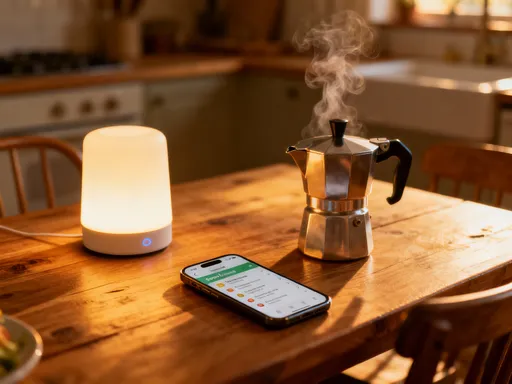
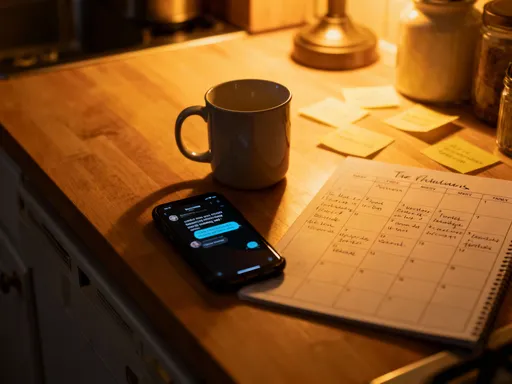
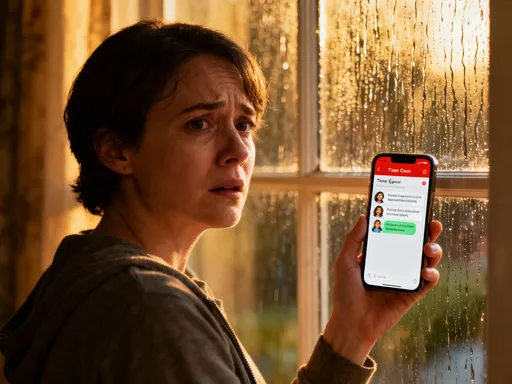
Let me paint a picture that might feel way too familiar. It’s 9:15 p.m. on a Sunday. The house is finally quiet, but your mind isn’t. You’re standing in the kitchen, one hand holding a half-empty coffee mug, the other scrolling through three different calendars on your phone. The kids’ soccer practice is Monday at 4:30, right? Or was it Tuesday? Did you sign the permission slip? Did you even print it? The grocery list is scribbled on a napkin stuck to the fridge with a dinosaur magnet. Your work to-do list lives in a Notes app, buried under five voice memos you haven’t transcribed. And somewhere in the chaos, you forgot—again—that the school newsletter said there’s a bake sale on Wednesday. You promised to bring cupcakes.
I missed that event. Not because I didn’t care, but because I was too overwhelmed to keep it all straight. That moment wasn’t just about forgetting a date. It was the breaking point. I felt like a failure—not as a mom, not as a professional, but as someone who was supposed to be able to *manage* her own life. I started asking myself: Why does staying on top of things feel like running a marathon in flip-flops? Why is it so hard to just… remember?
Here’s what I’ve learned: it’s not you. It’s not that you’re disorganized or lazy or not trying hard enough. It’s that we’re all carrying a mental load that no one taught us how to put down. We’re expected to be the family scheduler, the meal planner, the emotional anchor, the project manager of home life—and we’re doing it with tools that are either too basic (looking at you, sticky notes) or too complicated (I’m talking to you, color-coded spreadsheets with conditional formatting). The truth is, we weren’t built to remember everything. Our brains aren’t storage units. They’re meant for thinking, feeling, connecting—not for holding a dozen reminders about dentist appointments and dry cleaning pickup.
And here’s the quiet tragedy: we’ve normalized this stress. We joke about mom brain, laugh about forgetting birthdays, wear busyness like a badge of honor. But underneath the humor is real exhaustion. It’s the kind that seeps into your bones, that makes you short-tempered with the kids, that keeps you up at night replaying what you might have missed. I reached a point where I wasn’t just tired—I was resentful. Resentful of the invisible work, of the constant juggling, of feeling like I was always one missed text away from everything falling apart. That’s when I knew I needed help. Not from another self-help book, not from another app promising to fix my life. I needed real, human, tried-it-and-survived wisdom. And I found it where I least expected: online, in a place that felt more like a kitchen table chat than a tech forum.
Finding the Right Kind of Online Community (It’s Not What You Think)
When I first heard about online communities for productivity, I pictured something loud. Endless ads. Influencers in perfect lighting selling courses on how to wake up at 4 a.m. and drink green juice. That wasn’t me. That didn’t feel safe. I wasn’t looking for a transformation. I was looking for a lifeline.
What I found instead was a small, invite-only group on a platform I’d never heard of—no flashy branding, no follower counts, just a simple name: Real Routines. No one was trying to sell me anything. No affiliate links, no sponsored posts. Just real people—mostly women between 30 and 55, like me—sharing how they actually get through the week. Some were full-time moms, others worked from home, a few were caregivers for aging parents. What we had in common was this: we were all tired of the chaos.
The first thing that surprised me was how messy everything was. People posted screenshots of their calendars with overlapping events in clashing colors. Someone shared a photo of their planner with a big red “X” over Tuesday because “everything fell apart—kid vomited, dog ate the homework, I cried in the pantry.” And instead of judgment, the responses were full of kindness: “Been there,” “You’re not alone,” “What do you need to reset?”
That’s when I realized the magic wasn’t in the tools. It wasn’t about which app you used or how color-coded your schedule was. It was about trust. These weren’t experts handing down advice from a pedestal. These were peers who had been in the trenches and were willing to say, “I don’t have it all together, but here’s what helped me today.” One woman posted a 90-second video showing how she uses her phone’s voice recorder to dictate grocery items while folding laundry. Another shared a photo of her “emergency kit” in the car—snacks, crayons, a change of clothes—because “you never know.”
What made this different from every other online space I’d seen was the focus on *practicality*, not perfection. No one was shaming anyone for using pen and paper. No one was pushing the latest AI app. The conversation was grounded in real life: “Does this work when you’re sleep-deprived?” “Can you do this with a toddler climbing on your back?” “What if you only have ten minutes?” That shift—from chasing trends to learning from people like me—was the first real change in how I thought about organization. It wasn’t about upgrading my tech. It was about upgrading my support system.
How Shared Templates Saved My Weekends
I’ll never forget the first template that changed everything. It was a Sunday night reset checklist, posted by a woman named Lisa. She described it as her “five-minute reset that saves my whole week.” I rolled my eyes a little—another checklist? But I was desperate, so I tried it.
It wasn’t complicated. Just seven tiny tasks: wipe the kitchen counters, refill water bottles, check the calendar for Monday, lay out clothes, prep school bags, scan the fridge for dinner ideas, and set a 60-second timer to breathe. That was it. No deep cleaning. No hour-long planning session. Just small, doable actions that took less time than brushing my teeth.
But here’s what made it powerful: Lisa didn’t just share the list. She shared the *why* behind each step. “I lay out work clothes *before* I do laundry,” she wrote, “because if I wait, I’ll forget what’s clean and end up wearing wrinkled pants.” She admitted she started this after showing up to a Zoom meeting with mismatched socks. “We’ve all been there,” someone replied. “But now we don’t have to be.”
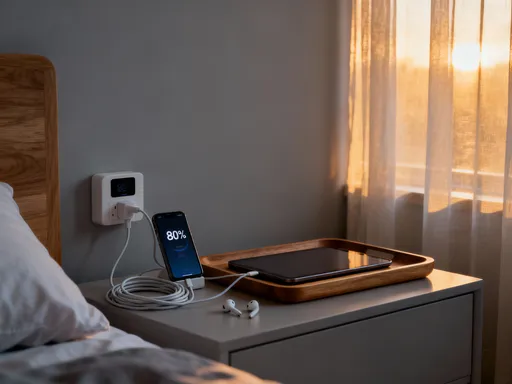
Within two weeks, my Sunday anxiety dropped by half. I wasn’t scrambling on Monday morning. I wasn’t realizing at 7:15 a.m. that I had no lunch to pack. That small ritual gave me a sense of control I hadn’t felt in years. And the best part? The group didn’t stop there. We started building on it. Someone added a line: “Charge all devices.” Another suggested: “Quick family huddle—ask kids one thing they’re looking forward to this week.”
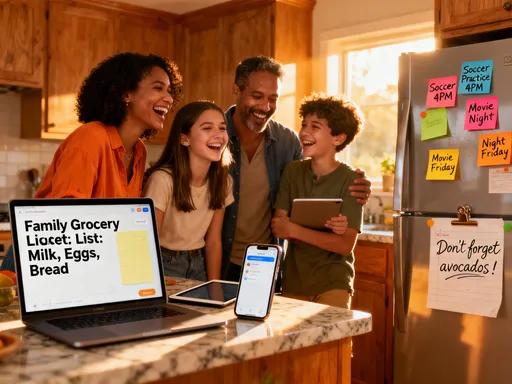
Soon, we had a library of micro-templates. A meal planning grid that fit on a sticky note. A digital cleanup routine for Sunday nights—five minutes to delete junk emails, clear downloads, and back up photos. A “family check-in” script for Sunday dinners: “What went well? What’s coming up? Who needs support?” Each one was short, realistic, and born from someone’s real struggle. We weren’t just sharing tips—we were sharing care. And because these systems came from people with lives like mine, I trusted them. I didn’t feel pressure to be perfect. I just felt seen.
Turning Chat Threads into Real-Life Routines
Knowledge is helpful. But consistency? That’s the real challenge. I could read all the templates in the world, but without follow-through, they were just digital clutter. What made the difference wasn’t the information—it was the connection.
The group started a simple practice: “quiet check-ins.” No big announcements. No pressure. Just pairing up with one other person and sending a quick message every Friday: “How did the grocery list work?” “Did the bedtime routine stick?” “Any tweaks for next week?”
I was matched with a woman named Maria. We’d never met in person. We lived in different time zones. But every Friday, like clockwork, I’d get a message: “Hey, did you try the meal plan? No rush, no guilt—just curious.” And I’d reply, usually with something honest: “I made it through Monday and Tuesday, then we had pizza on Wednesday. But I prepped two dinners on Sunday, so that’s progress!” And she’d say, “That’s huge! Celebrate that.”
These tiny exchanges did something powerful. They kept me accountable—not in a harsh, judgmental way, but in a gentle, “I’m here with you” way. I realized that motivation is fleeting. Some days, I didn’t *feel* like planning. But I did it anyway, because I knew Maria would ask. And I didn’t want to let her down. But more than that, I didn’t want to let *myself* down in front of someone who believed in me.
The platform we used made it easy. No meetings to schedule. No long threads to follow. Just private messages, low pressure, high care. And over time, those check-ins became part of my rhythm. They weren’t about reporting success. They were about staying connected to the process. I started looking forward to Fridays, not as the end of the week, but as a soft landing—a chance to reflect, reset, and feel seen. That’s when I realized: technology isn’t just about efficiency. It’s about humanity. When used right, it can create space for the kind of support that used to require a village.
Customizing the System Without Losing the Simplicity
Here’s something I learned the hard way: copying someone else’s routine doesn’t mean it will work for you. I saw a post from a woman who planned her entire week on Sunday mornings—two hours of deep focus, journaling, goal setting. She looked so serene. I thought, “If I do what she does, I’ll feel that peace.”
So I tried it. I set my alarm for 5 a.m. I made tea. I opened my notebook. By 5:10, I was falling asleep. By day three, I was resentful. By day five, I’d given up. I felt like a failure—again.
But when I shared this in the group, no one scolded me. No one said, “You just need more discipline.” Instead, someone wrote: “Adjust the *timing*, not the *intent*.” Another added: “Maybe your energy peaks at night. Try planning on Wednesday after the kids are in bed.”
That small shift changed everything. I moved my planning to Wednesday evenings. Thirty minutes. No journaling, no vision boards—just reviewing the week, checking the calendar, and writing three priorities for the next few days. It felt natural. It stuck. And slowly, I built my own version of the system—one that fit *my* rhythm, not someone else’s.
The group started calling these “flexible swaps.” We’d tag tips with notes like: “Works best in the morning,” “Can be done in 10-minute chunks,” “Great for visual planners,” or “Good for phone-only users.” This wasn’t about one-size-fits-all. It was about adaptation. We were learning how to take the bones of a good idea and fit them to our real, messy, unpredictable lives. And that made all the difference. The system wasn’t rigid. It was responsive. It grew with us.
When the System Falters—And That’s Okay
No system is bulletproof. Life happens. Last month, my youngest got the flu. For five days, everything stopped. I didn’t plan. I didn’t check in. I didn’t wipe the counters or lay out clothes. I survived on soup, pajamas, and Netflix. And when I finally logged back into the group, I expected shame. I braced for messages like, “Where have you been?” or “You fell off the wagon.”
Instead, I saw a post from another mom: “Dropped the ball this week. Sick kid, missed two check-ins, lived on takeout. How do I restart?” And beneath it, five replies: “Send a single emoji to reset,” “Just show up,” “One small step—open your calendar,” “You’re not behind, you’re human,” “We’ve all been there—welcome back.”
I cried. Not because I was overwhelmed, but because I felt held. That moment taught me the most important lesson: sustainability isn’t about consistency. It’s about compassion. The best systems aren’t the ones that never fail. They’re the ones that make it easy to begin again.
The group had built grace into the design. There was no scoring, no streaks, no public accountability. Just private kindness and a single actionable step to get back on track. That’s what makes this different from every other productivity tool I’ve tried. It doesn’t punish you for being human. It expects it. And in that space, I found freedom. I could miss a week. I could forget a check-in. I could eat cereal for dinner. And it was okay. Because the goal wasn’t perfection. The goal was presence. Showing up, again and again, even when it’s hard.
Beyond Time Saved: The Quiet Joy of Feeling in Control
Yes, I cut my weekly planning from three hours to thirty minutes. But that number doesn’t capture the real win. The real change wasn’t on the clock—it was in my body, in my heart, in the way I move through my days.
That constant hum of anxiety? It’s quieter now. Some days, it’s gone. I still have busy weeks. I still forget things. But I don’t spiral. I have tools. I have people. I have a way back.
I have more time, yes. But more importantly, I have more space. Space to breathe. Space to notice the way my daughter twirls in her rain boots. Space to sit with my husband after the kids are in bed and actually talk. Space to enjoy a cup of tea without rushing to the next thing.
This online community didn’t just give me better systems. It gave me back my sense of agency. It reminded me that I’m not alone in this. That asking for help isn’t weakness—it’s wisdom. That small, shared acts of care can rebuild confidence one checklist at a time.
Technology gets praised for speed, for efficiency, for doing more in less time. But the real magic? It’s in the connection. It’s in finding your people, your rhythm, your peace. Because when life feels lighter, everything gets better. You’re kinder. You’re calmer. You’re more present. And that, more than any perfectly planned week, is the life I wanted all along.